

Bathroom Vanity Replacement: 5 Things to Know
August 23, 2026
How To Measure Your Kitchen for a Remodel: A Step-by-Step Guide
August 23, 2026

How To Measure Your Bathroom for a Remodel: A Step-by-Step Guide
Taking a few basic measurements before your consultation helps our designers understand your space and makes your first appointment more productive.
Download Printable Measurement GuideWhat You’ll Need
Gather These Items Before You Start
- Tape measure
- Pencil
- Camera or smartphone
- Printable grid paper
- Dimensions or model information for fixtures you’re keeping
Sketch Your Floor Plan and Take Pictures
Start by making a simple overhead sketch of your bathroom. It does not need to be professionally drawn.
- Use the grid paper included in the printable measurement guide.
- Record every measurement in inches. For example, a four-foot wall should be marked as 48 inches.
- Measure the full width of each wall from corner to corner.
- Take a clear picture of each wall to share with your designer.
- If you are planning a new tub or shower, allow approximately one-half inch on each wall for drywall when estimating the available space.
Mark Windows, Doorways and Other Obstructions
Add anything that could affect the placement of a vanity, tub, shower, toilet or storage cabinet.
- Measure the height and width of each window and doorway.
- Include the frame or molding in each measurement.
- Measure from the nearest corner to the outside edge of each window or door frame.
- Mark vents, radiators, access panels and other permanent obstructions.
Mark Anything You’re Keeping
If any existing fixtures or features will remain, add them to your sketch and record their dimensions.
- Measure the height, width and depth of any fixture you plan to keep.
- Mark the current location of the toilet, vanity, tub and shower.
- Include mirrors, storage cabinets or other wall-mounted items that will remain.
- Bring model information for fixtures whenever it is available.
Mark Plumbing Locations
Existing plumbing can affect the location and cost of vanities, sinks, toilets, tubs and showers.
- Measure plumbing locations from the center of the pipe or fixture to the nearest wall.
- Note whether the vanity sink drain runs into the floor or the wall.
- Mark the locations of visible water-supply lines.
- Show the approximate center points of the toilet, sink, tub and shower drain.
Mark Electrical Outlets and Switches
Show the location of electrical outlets, switches and visible electrical connections.
- Measure from the center of each outlet or switch to the nearest wall.
- Mark outlets used for grooming tools or countertop appliances.
- Note electrical connections for vanity lights, wall sconces, exhaust fans or illuminated mirrors.
Note the Ceiling Height
Ceiling height can affect shower enclosures, tall storage, lighting and ventilation.
- Measure the ceiling height in two to four locations throughout the room.
- Note any sloped ceilings, bulkheads or areas where the ceiling height changes.
- Mark the location of exhaust fans, ceiling lights and other overhead obstructions.
Double-Check Your Measurements
Review your sketch and make sure the individual measurements add up to the total length of each wall.
- Confirm that every wall has a total measurement.
- Check that windows, doors, fixtures, plumbing and obstructions are included.
- Make sure every measurement is recorded in inches.
- Bring your sketch, photographs and fixture information to your consultation.
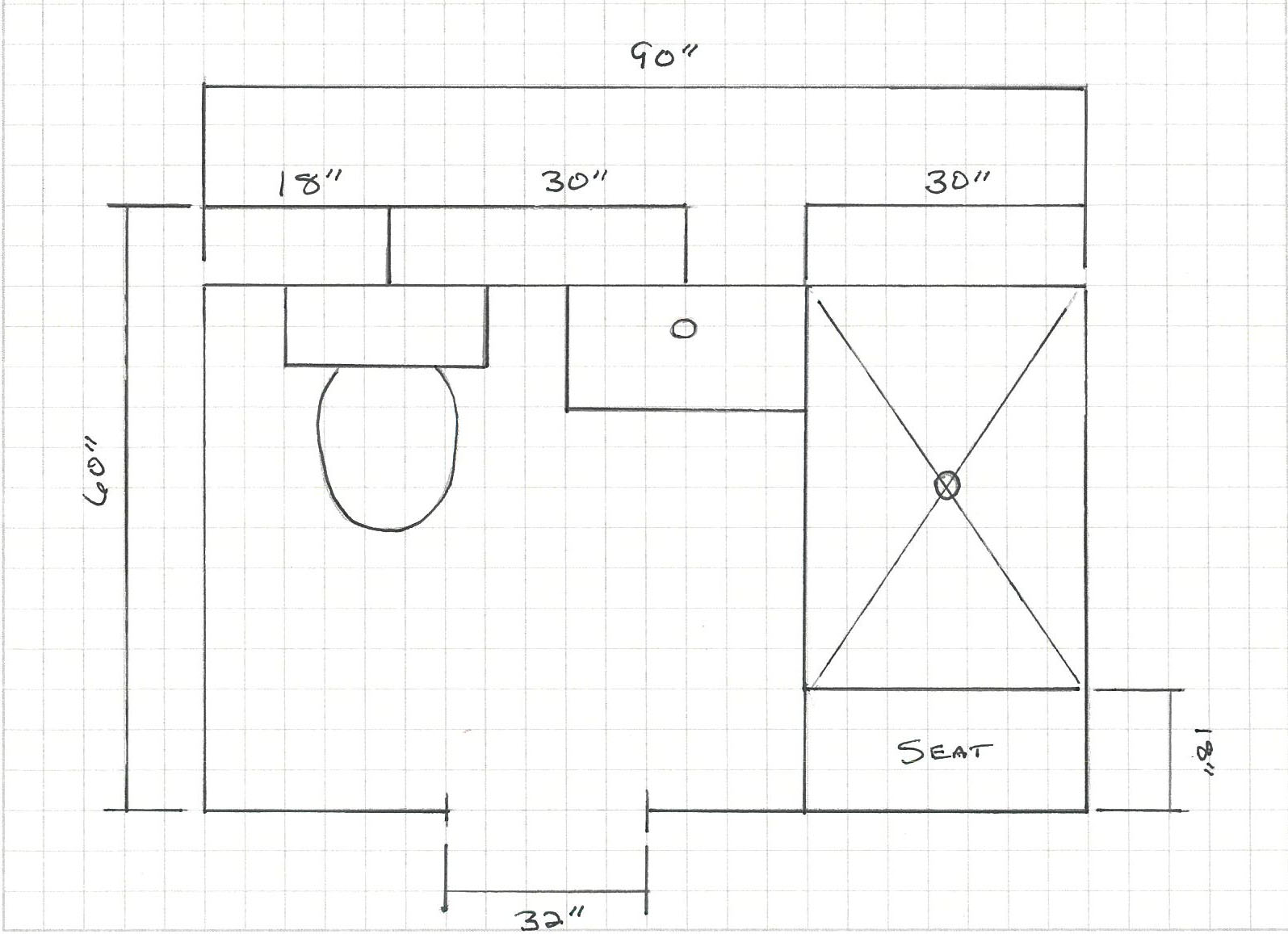
Example Floor Plan
See What a Completed Measurement Sketch Looks Like
Your drawing does not need to look perfect. This example shows the type of information that helps your designer understand wall lengths, fixture locations, openings and available floor space.
The printable guide also includes blank grid paper and spaces to record fixture dimensions, ceiling heights, notes and project exceptions.
Bathroom Measurement FAQ
Questions Homeowners Often Ask
Do my initial bathroom measurements need to be exact?
No. Your sketch and measurements provide a starting point for the first design conversation. A Von Tobel professional will confirm the final dimensions before products are ordered or the design is finalized.
Do I need to measure my existing tub or shower?
Yes, especially if the existing tub or shower will remain or if you want to replace it with a similarly sized product. Record the width, depth and height, along with the locations of the plumbing fixtures and drain.
What if I want to convert a tub into a walk-in shower?
Measure the full tub area and note the plumbing and drain locations. Bring photos as well. Your designer can help you understand which shower configurations may work within the available space.
Do I need to measure the plumbing locations?
Approximate plumbing locations are helpful because moving water lines and drains can affect project scope and cost. Measure from the fixture or visible pipe center to the nearest wall whenever possible.
What should I measure if I want to replace my vanity?
Measure the current vanity’s width, height and depth. Also note the sink and plumbing locations, nearby door or drawer clearances and the distance to the toilet, tub or shower.
What if I am keeping my current bathroom flooring?
Measure the footprint of the existing vanity. That information helps your designer look for a replacement that covers the same area and reduces the chance of exposing unfinished flooring.
Can someone from Von Tobel confirm my measurements?
Yes. Your initial measurements help begin the planning process, and a professional measurement can be completed before your bathroom design is finalized.
Ready for the next step?
You Don’t Need to Have Everything Figured Out.
Bring your sketch, photos, measurements and questions, and one of our bathroom designers will help you take it from there.


